The ELABEST X100 Ergonomic Mesh Office Chair review centers on a feature-rich design for people who want an adaptable desk chair that can shift from focused work to reclined breaks.
Its moving lumbar support, adjustable arms, breathable mesh, and extendable footrest offer plenty to consider, though comfort depends on how well its adjustments fit your body and desk.
ELABEST X100 Review Summary
The quick verdict
1,000+ ratings
Read Amazon ReviewsELABEST X100 Ergonomic Mesh Office Chair
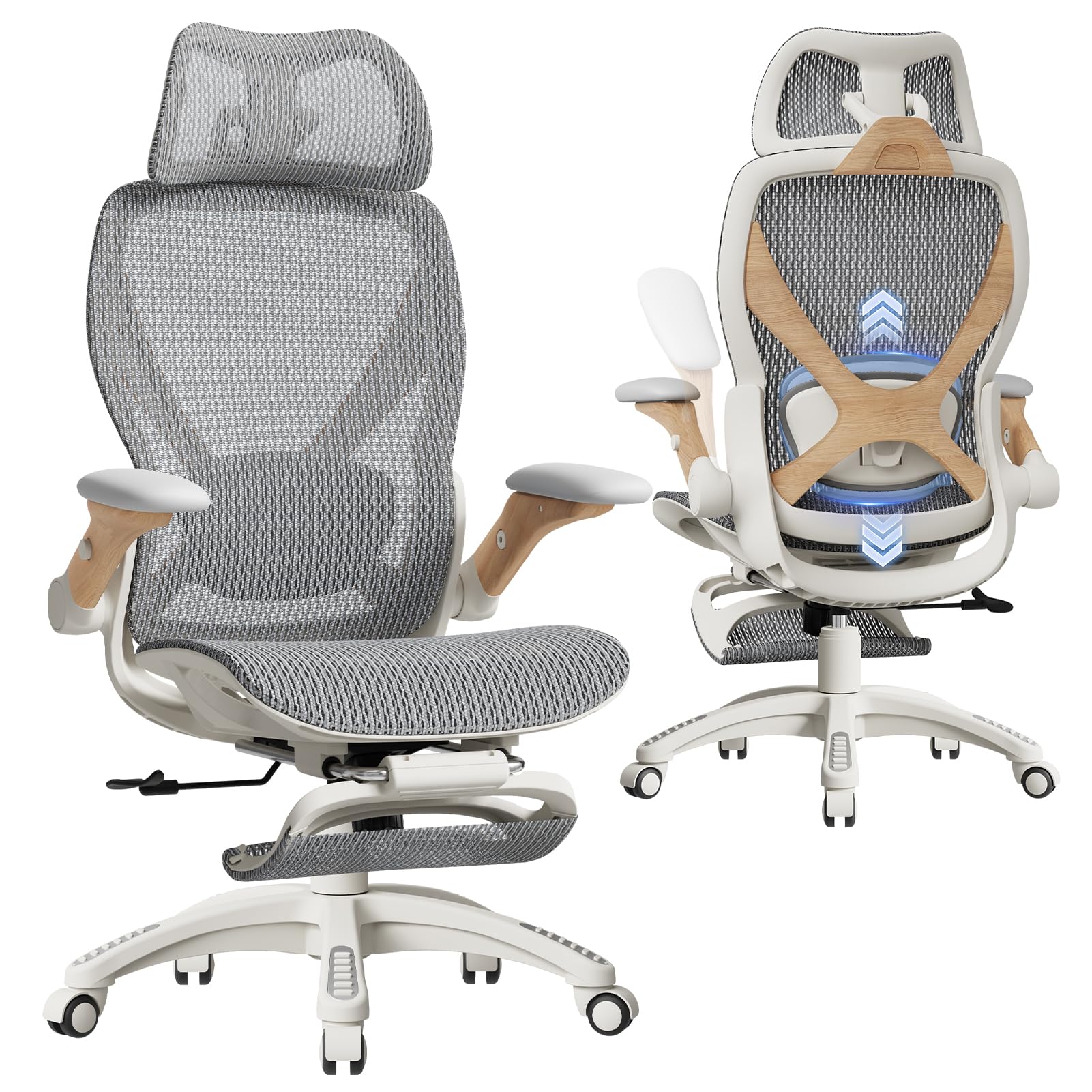
A highly adjustable mesh chair for home office users who want dynamic lumbar support, flip-up arms, and a footrest for reclined breaks.
- Dynamic lumbar support adjusts 1.6 inches in depth, 2 inches in height, and 15 degrees in rotation, with a spring-loaded tracking design.
- Five-way flip-up armrests adjust in height, width, forward and backward position, and rotation; the pads use EVA foam.
- A 3D headrest measures 28 cm and is designed around a cervical curve.
- Three-stage reclining works with an 18-inch extendable footrest that has two angle positions.

Pros
- Multiple points of adjustment let buyers tune lumbar, arm, and head support to their preferred sitting position.
- The extendable footrest creates an option for reclined breaks without needing a separate ottoman.
Consider before buying
- The many adjustment points may take time to set up, and a broad feature set does not ensure every control will suit every body.
- The 18.3-inch minimum seat height may be too high for some users or desk arrangements; compare it with your seated leg position before buying.
Read the full review summary
The X100 combines several fit adjustments in one chair: a spring-loaded lumbar system that moves in three dimensions, five-way flip-up armrests, a 3D headrest, and a reclining mechanism paired with an extendable footrest.
That range can appeal to people who alternate between typing, gaming, reading, and resting rather than staying in one fixed posture.
Its mesh construction and 18.3–23-inch seat-height range are useful considerations for a home workspace, while the 300-pound capacity and BIFMA-certified construction provide concrete fit and build parameters.
Before choosing it, check that the seat-height range works with your desk and that the lumbar, arm, and headrest positions suit your proportions; a large adjustment count alone cannot guarantee a comfortable fit.
The buying factors
ELABEST X100 Scorecard
Editorial scores reflect listed features and buyer fit; they are not laboratory measurements or customer ratings.
Adjustment range
Lumbar, armrests, headrest, recline, and footrest all have described adjustments, giving buyers several ways to tailor the chair.
Lumbar flexibility
The spring-loaded support adjusts in height, depth, and rotation and is designed to track movement.
Recline and rest options
Three-stage reclining is paired with an extendable footrest and two footrest angle positions.
Workspace flexibility
Flip-up arms can help the chair tuck beneath a desk, subject to the desk's clearance and the chair's dimensions.
Breathable design
The chair uses ventilated mesh, a relevant feature for buyers who prefer a less enclosed seat and back.
Fit information
A seat-height range and weight capacity are given, but buyers may still need to assess seat and back dimensions against their own fit needs.
Key Features and Specifications of ELABEST X100
- Dynamic lumbar support adjusts 1.6 inches in depth, 2 inches in height, and 15 degrees in rotation, with a spring-loaded tracking design.
- Five-way flip-up armrests adjust in height, width, forward and backward position, and rotation; the pads use EVA foam.
- A 3D headrest measures 28 cm and is designed around a cervical curve.
- Three-stage reclining works with an 18-inch extendable footrest that has two angle positions.
- Dual-Stripe AirMesh covers the chair, with the product description emphasizing airflow and elasticity.
- The listed seat-height range is 18.3–23 inches, and the stated maximum weight capacity is 300 pounds.
- The chair is described as BIFMA certified, with a Grade-4 gas lift, nylon base, rolling casters, tool-free assembly, and a five-year warranty.
Pros and Cons of ELABEST X100
Pros
- Multiple points of adjustment let buyers tune lumbar, arm, and head support to their preferred sitting position.
- The extendable footrest creates an option for reclined breaks without needing a separate ottoman.
- Flip-up armrests can make it easier to move the chair closer to a desk when the arms are not needed.
- Mesh materials are intended to support airflow across the chair's contact surfaces.
Consider before buying
- The many adjustment points may take time to set up, and a broad feature set does not ensure every control will suit every body.
- The 18.3-inch minimum seat height may be too high for some users or desk arrangements; compare it with your seated leg position before buying.
- The 300-pound capacity and stated seat-height range are specific fit limits, so buyers outside them should look for a chair with suitable published dimensions and capacity.
Who Should Buy ELABEST X100?
Good fit
Consider the X100 if your workday includes frequent posture changes and you value a footrest for occasional reclined breaks.
Its combination of moving lumbar support, a 3D headrest, and adjustable armrests gives you several ways to adapt contact points as you switch between desk work and downtime.
It may also suit a shared home office where the chair needs to serve work and gaming routines.
The flip-up arms can help with desk clearance, while the mesh design and seat-height adjustment offer practical features for daily use.
Check the required clearance beneath your desk and compare the chair's seat height with your desk and leg position.
Treat fit as the deciding factor: if possible, assess whether the lumbar mechanism can sit where your lower back needs support and whether the headrest meets your neck comfortably.
Confirm warranty terms and assembly details for your purchase before ordering.
Who should skip it
Look elsewhere if you need a seat height below 18.3 inches, or if your weight exceeds the stated 300-pound capacity. The described range and capacity may not fit your setup.
Skip it if you want a simpler chair with fewer controls or do not expect to use a footrest or reclining position. In that case, its extra adjustment features may not add much value to your routine.
What the ELABEST X100 Means for Your Workspace
Support that moves with you
The spring-loaded lumbar mechanism is designed to follow changes in posture while allowing height, depth, and rotation adjustments.
That can be useful if you move between upright typing and leaning back, but setup matters: take time to place the support against your lower back rather than assuming an automatic tracking design will fit correctly without adjustment.
One chair for work and breaks
A three-stage recline and extendable footrest point to a chair intended to handle both desk work and more relaxed sitting.
This combination makes the X100 more versatile for short breaks, though the description does not specify recline angles or footrest dimensions beyond its extension length. Check that your room has enough space for the footrest when extended.
Arms and headrest are part of the fit
The five adjustment directions for the armrests provide options for changing elbow support and moving the arms out of the way. The 3D headrest adds another point of adjustment.
Buyers should match these settings to their desk height, shoulder position, and neck support preference; armrests that sit too high or a headrest that misses the neck can undermine an otherwise useful setup.
Check the dimensions before deciding
The stated seat-height range and capacity give a starting point for assessing compatibility, but they do not describe every dimension that affects fit.
Compare the seat and back dimensions with your body and desk, and confirm that the chair can approach your workspace comfortably with the arms in your preferred position.
Alternatives to ELABEST X100
Home Office Desk Chairs alternative
17,000+ ratings
Read Amazon ReviewsSIHOO B100 Office Chair
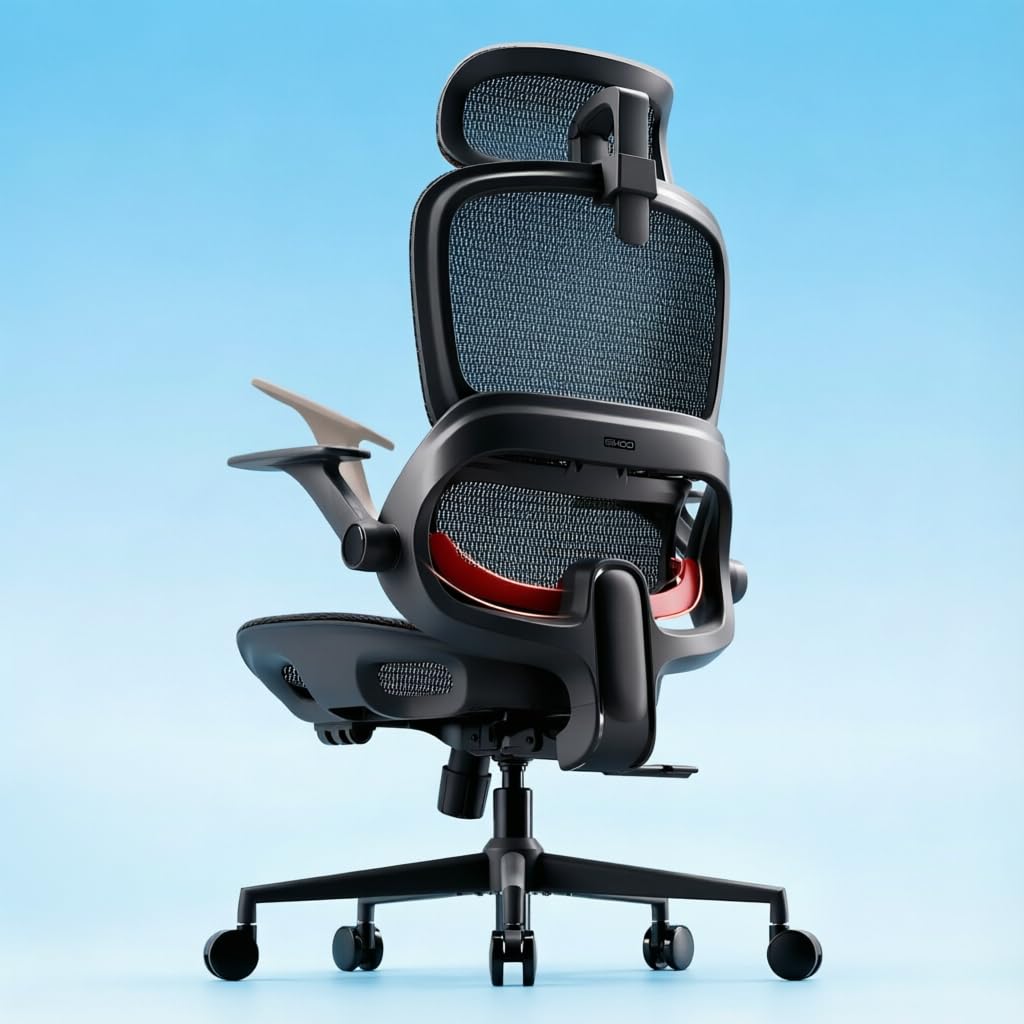
Choose between them based on your use of reclined breaks: the X100's footrest is the more relevant feature if you want leg support, while the B100's simpler described setup may fit buyers who want recline and flip-up arms without that feature.
- The SIHOO B100 describes three recline angles, an extra-wide 2D headrest, flip-up arms, and a 300-pound capacity; it does not include a footrest in its product name and description.
- The ELABEST X100 includes an extendable footrest and five-way flip-up arms, alongside three-dimensional lumbar adjustment.
Home Office Desk Chairs alternative
17,000+ ratings
Read Amazon ReviewsSIHOO B300 PRO Ergonomic Mesh Office Chair
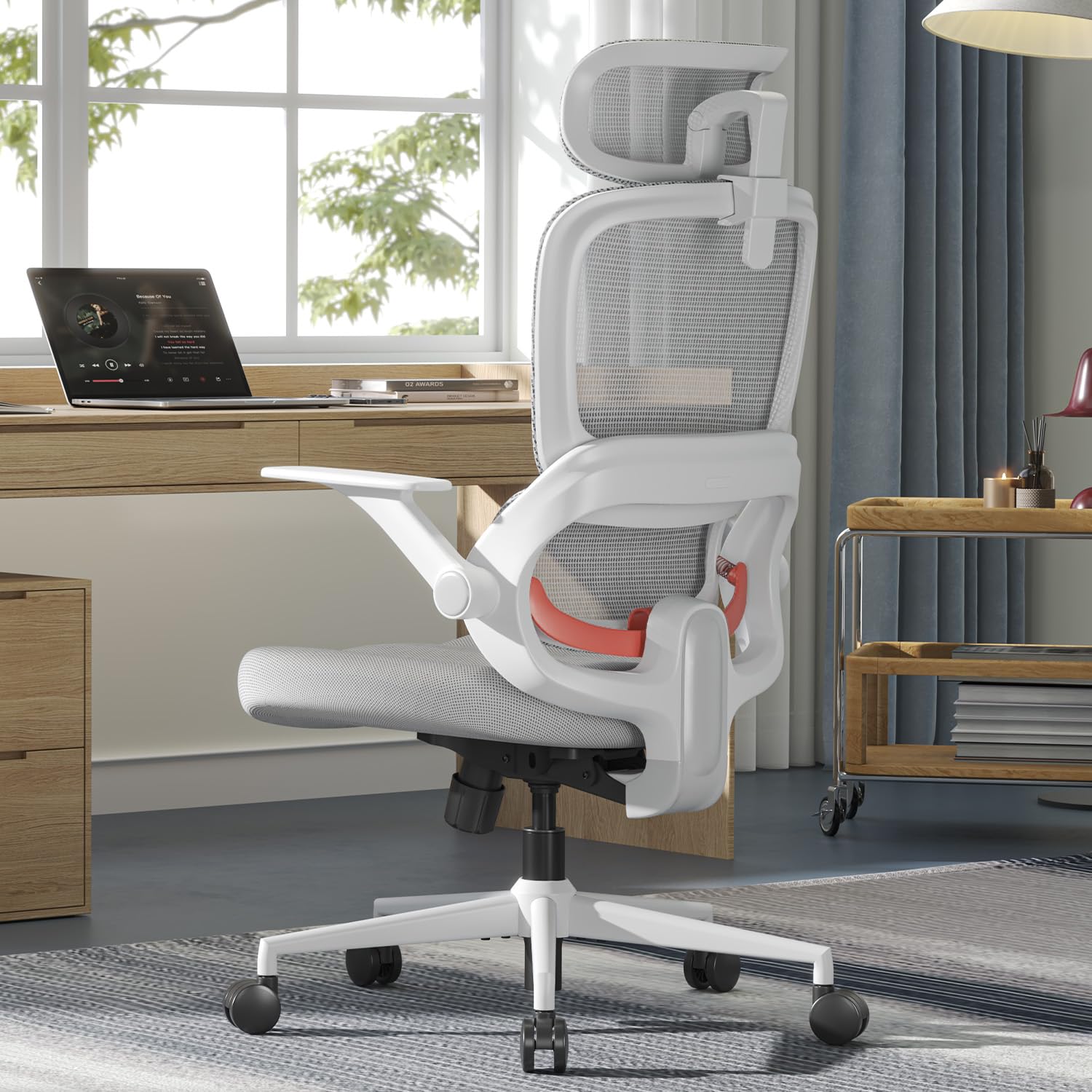
The B300 PRO may be a better match if seat-depth and backrest-height adjustments are priorities for tailoring fit. The X100 is the more relevant choice if you specifically want an extendable footrest and flip-up armrests.
- The SIHOO B300 PRO describes adjustable seat depth, an independently height-adjustable backrest, four-way spring-assisted lumbar support, and weight-sensing recline; its description does not include a footrest.
- The X100 focuses on a footrest, five-way flip-up arms, a 3D headrest, and spring-loaded lumbar tracking.
Is ELABEST X100 Worth It?
The ELABEST X100 is worth considering if you want a mesh office chair with extensive adjustment options and a footrest for relaxed breaks.
Its strongest appeal is the combination of moving lumbar support, adjustable arms and headrest, and recline in one work-and-leisure design.
Before buying, confirm that its 18.3–23-inch seat-height range, 300-pound capacity, and dimensions suit your body and desk.
If those checks work for you and you expect to use the footrest and adjustments, the X100 offers a versatile feature set; if you prefer a simpler chair or do not need reclined support, its added mechanisms may be unnecessary.
Your review at a glance
1,000+ ratings
Read Amazon ReviewsELABEST X100 Ergonomic Mesh Office Chair
A highly adjustable mesh chair for home office users who want dynamic lumbar support, flip-up arms, and a footrest for reclined breaks.
- Dynamic lumbar support adjusts 1.6 inches in depth, 2 inches in height, and 15 degrees in rotation, with a spring-loaded tracking design.
- Five-way flip-up armrests adjust in height, width, forward and backward position, and rotation; the pads use EVA foam.
- A 3D headrest measures 28 cm and is designed around a cervical curve.
- Three-stage reclining works with an 18-inch extendable footrest that has two angle positions.